Minutes
International Ocean Networks (ION)
Breakfast Meeting
DRAFT
December 13, 2006 (AGU)
San Francisco
Attendees:
Adam Dziewonski
Peter Bromirski
Ralph Stephen
Rhett Butler
Barbara Romanowicz
Jean Paul Montagner
Adam Schultz
Bob Detrick
Seiji Tsuboi
Regrets from the following:
Becker
Person
Villinger
Mooers
Chave
Favali
Stutzmann
Deschamps
Taritts
There
have been so many developments in the US, with regard to the Ocean Observatory
Initiative, and in other countries (e.g. ESONET under EC Framework 7, and
others), that it is time for a fundamental review of ION's activities. Will the ION objectives be
met under the emerging observatory plans? In light of these emerging plans
should we hold a community workshop to produce a white paper to inform planning
for new initiatives to achieve the ION science goals? These issues and questions were discussed with no definitive
conclusions
ION
is co-sponsoring with IASPEI a Special Session on “Underwater Observatories”
(JSS016) at the 2007 IUGG meeting in Perugia (July
2-13, 2007). The deadline for abstract submissions to the meeting was
extended from January 15 to February 28.
One abstract has been submitted so far. Adam and Barbara agreed to be
the ION points-of-contact for this session.
Progress reports were presented by the various attendees as follows:
Tsuboi-san
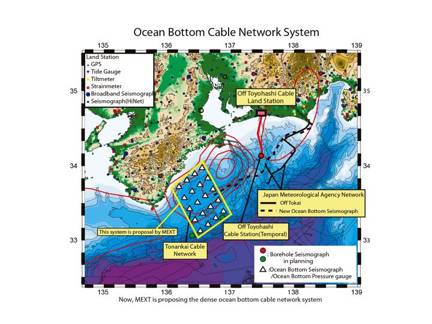
– Presented plans for the Tonankai cabled OBS array.
Rhett Butler
– The Hawaii-2 Observatory (H2O) is no longer active and plans for
further work are in a hiatus (Appendix 1 - although undated this letter was
being distributed via email prior to December 1, 2005).
- An H2O
proposal has been submitted to NSF. IRIS is not a participant in this proposal.
- Using its final H2O funds, IRIS has
paid the License fees for 2007 for the Makaha Cable Station, on behalf of IRIS
Ocean Cable.
- A formal request should be made to
OBSIP to release data from at least one sensor of a deployment immediately
without going through the 1-2 year moratorium. The PASSCAL policy is: “All passive experiments with five or
more stations will designate at least one station as an “open station”. The
data from the “open station/s” will be made available to the public immediately
upon being archived.” (PASSCAL
website: http://www.passcal.nmt.edu/information/Policies/data.delivery.html )
Jean Paul Montagner – France and Japan
continue to struggle with funding and planning for the NERO observatory.
Ralph
Stephen/ Bob Detrick - Ralph passed
out the ION proposal that was submitted to IODP for the October 1, 2006 submission
date. This summarized pretty well
the material that Bob D. presented on the ORION/OOI status, with the added info
that the Southern Pacific Site was no longer in consideration. (Appendix 2)
Barbara Romanowicz - A project has been funded to connect the MOBB system to the
MARS seafloor cable (Appendix 3)
Appendix
1: Larry Clark Letter on H2O
Planning
Dear friends and participants in the
H2O Observatory project:
I am writing to report that after
extensive discussions internally at NSF and with numerous members of the
research community, the Division of Ocean Sciences has reluctantly decided to
put any further development of the H2O Observatory on an indefinite hold. This
includes all current plans for a re-deployment. This decision was based on
several factors:
-
NSF is
under significant resource constraints within the current fiscal year that will
likely continue into the near future. As such there is increasing competition
among highly rated research projects with large resource demands such as H2O.
To the best of our knowledge, the minimum cost excluding ship time to proceed
through the integration tests to deployment is close to $1.3M.
-
The
money alone is not the issue. A primary focus of our extensive internal
discussions has been the scientific rationale for the H2O Observatory. These
cross-divisional discussions have demonstrated that the scientific drivers for
H2O are not as strong as they were at the time of initial funding. There are
many highly rated, scientifically compelling proposals being declined for a
lack of resources. A consensus of research programs is that the science
justifying further H2O investments cannot be given the necessarily higher
priority at this time.
-
The
proof-of-concept, test-bed element of H2O is no longer a strong supporting
argument. Because of its analog system and fairly unique technical
requirements, there is little engineering development related to H2O that will
be essential to future OOI and ORION planning.
There are several other contributing
factors as well that need not be mentioned. But for all these reasons we have
determined that we are unwilling to make the large resource commitment needed
to make the H2O Observatory operational at this time. Should the community feel
that H2O is of sufficiently high scientific priority to justify the resources
needed to make the site operational, we will be receptive to a new proposal to
complete the work needed to proceed with testing and re-deployment of the H2O
system. Such a proposal should include not only a very strong scientific
justification for proceeding, but should also outline a management plan for the
facility in both the testing and operations phases, as well as a documented
estimate of the costs involved with integration testing, deployment, and future
operations and maintenance. Needless to say, any new proposal would undergo
peer review.
In summary, there is a great deal of
very exciting science that we are currently not able to fund and the science
drivers for the H2O site are not deemed to be competitive in the current
resource climate. We leave it up to the community to determine how it wishes to
proceed.
Sincerely,
Larry Clark
OCE Division Director
Appendix 2: ION Response Letter to IODP Proposal
(631-Pre)
September 28, 2006
Drs.
N.O. Eguchi & J.D. Schuffert
iSAS
Office
2-15
Natsushima-cho,
Yokosuka,
237-0061,
JAPAN
Re: Proposal No. 631-Pre - Global siting
plan for borehole geophysical observatories in the International Ocean Network
Dear Drs.
Eguchi/Schuffert,
This
is a third Response Letter to bring you up to date on our progress with
Pre-Proposal No. 631. The ION
community has been active over the past few years in planning and pursuing
funding for installing broadband seismometers in existing holes and in
coordinating long-term planning and standards with the new permanent seafloor
observatory initiatives (OOI/ORION, etc).
Figure 1 summarizes the ION "vision" for a network of
broadband borehole seismometers to provide uniform seismic coverage over the
surface of the globe. Not much has changed since this figure was first
published in 2003.
In
the last response letter we advocated a staged approach to instrumenting
borehole seismic sites. At the sites that are targeted for meeting ION objectives,
autonomous borehole seismic stations should be deployed for a year or so, prior
to installing the network infrastructure.
As we know there are many logistical reasons as well as just plain bad
luck that
lead
to sub-optimal seafloor seismic installations. It makes sense that we should be able to demonstrate that a
seismic installation is providing valuable, high quality data before committing
to a high cost real-time acquisition system. (This is the plan that is being followed with the four
broadband borehole seismic installations in the Western Pacific and Japan
Trench [Araki, et al., 2004; Suyehiro, et al., 2002]. The systems are
installed in an autonomous recording fashion while their data quality is being
evaluated. The option of linking
these sites to cables for real-time acquisition is left open for a second
stage.)
Although
progress towards global borehole sites has been slow, we have been gaining
experience with cabled coastal seafloor seismic stations. 1) An autonomous recording seafloor station has been running in
Monterey Bay for over three years [Dolenc, et al., 2006; Stutzmann, et al., 2001].
This sensor could possibly be converted to a cabled observatory to
MBARI. If a proposal to drill in
Monterey Bay is successful this site could also potentially be augmented with a
borehole station. 2) A cabled seafloor station has been
running for over a year in the Mediterranean off France as part of the Antares
project. 3) Testing of the multidisciplinary
seafloor observatory, GEOSTAR, has been ongoing [Monna, et al., 2005]. 4) Unfortunately the telemetry to the H2O station has
been down for a number of years and it is not clear when this will become
operational again. 5) Funding has been sought in Japan and
France for a broadband borehole observatory at the Ninety-East Ridge
Observatory (NERO) but so far without success. Because the site is so remote, technology is being developed
to reduce maintenance efforts.
This takes time. 6)
Meanwhile the four autonomously recording broadband borehole
installations off Japan continue to provide data to the extent that their power
supplies, data storage capability, and ships schedules allow.
In
the US we have been unsuccessful in securing funding for autonomously recording
global borehole seismic stations.
The strategy here has been to combine the ocean seismic network
objectives with the multidisciplinary global observatory efforts, OOI/ORION, to
get real-time continuous global observatories. The OOI/ORION Conceptual Network Design (CND) based on the
workshop in Salt Lake City in March 2006 summarizes the thoughts to date. Although the ION Global Siting Plan
(Figure 1) had been submitted as an RFA to the OOI/ORION office, compromises
had to be made to coordinate these sites with other multi-disciplinary
objectives. Figure 2 (from the
CND) shows the top three sites that were chosen for the seismic, borehole and
multidisciplinary observatories.
1) The mid-Atlantic Ridge
site coincides with DSDP Re-entry site 396 that was drilled on Leg 46. 20 Unfortunately the East Pacific Rise site is not co-located
with ODP Site 1243A that was drilled on ODP Leg 203. 3) The third
site satisfies a strong recommendation from ION to place a seismic observatory
in the Southern Pacific Ocean where there is a large gap in coverage. Figure 3 summarizes the OOI
Global Siting Strategy after all multidisciplinary interests have been taken
into account. The five sites
labelled "A" have "top priority" and a priority was not
assigned within this group.
If the East Pacific Rise (A3) and the Western Southern Pacific (A5)
sites are chosen for permanent observatories there would be a strong incentive
to drill boreholes at these sites for ION global broadband borehole seismic
installations.
The
Ocean Seismic Network community will of course continue to pursue funding for
autonomous broadband borehole stations at the existing boreholes sites shown in
Figure 1.
It
is worth noting that this pre-proposal focused specifically on sites to
complete "uniform global seismic" coverage. Although supported by the ION community boreholes for test
facilities, for non-seismic objectives, and for regional and local seismic
objectives were not addressed.
Yours
sincerely,
Ralph
Stephen
References
Araki,
E., et al. (2004), Improvement of seismic observation in the ocean by use of
seafloor boreholes, Bulletin of the Seismological Society of America, 94, 678-690.
Dolenc, D., et al. (2006), Monterey Ocean
Bottom Broadband Station (MOBB):
data analysis and noise reduction, Seismological Research Letters, 77, 218.
Monna, S., et al. (2005), High Quality Seismological
Recordings from the SN-1 Deep Seafloor Observatory in the Mt. Etna Region, Geophysical
Research Letters, 32, 1-4.
ORION Program Office (2006), Global
observatory conceptual network design for ORION's Ocean Observatories
Initiative (OOI), Joint Oceanographic Institutions, Inc., Washington, D.C.
Stutzmann, E., et al. (2001), MOISE: A
prototype multiparameter ocean bottom station, Bulletin of the Seismological
Society of America, 91, 885-892.
Suyehiro, K., et al. (2002), Deep sea
borehole observatories ready and capturing seismic waves in the Western
Pacific, Eos, Transactions, AGU (Supplement), 83, 621, 624-625.
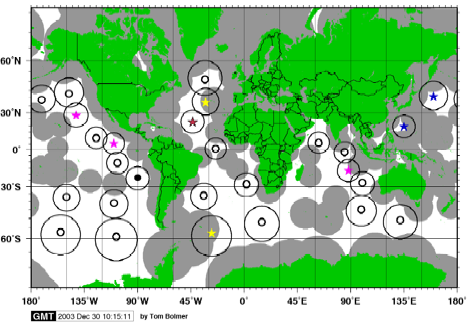
Figure 1: This
figure summarizes the role of ocean borehole sites in global seismic coverage.
The grey shaded regions indicate the surface coverage out to 1000km from
continent and island stations. (These are distorted in the projection.) White
spaces are gaps in the land based coverage. Existing and proposed ocean
stations for global coverage are indicated by symbols surrounded by black
circles at approximately 1000km radius. The different symbols show different
levels of progress at the ocean sites: red star - the Mid-Atlantic Ridge test
site (the OSNPE and Japan Sea regional test sites are not shown), blue stars -
presently operating borehole observatories (the Japan Trench regional sites are
not shown), maroon stars - sites at which boreholes have been drilled but have
not yet been instrumented, solid and open black circles - high priority ION
sites proposed in 1996 but not yet drilled and yellow stars - other proposed
sites which have not yet been drilled [Butler, 1995; Purdy and Dziewonski, 1988; Stephen et al., 2003].
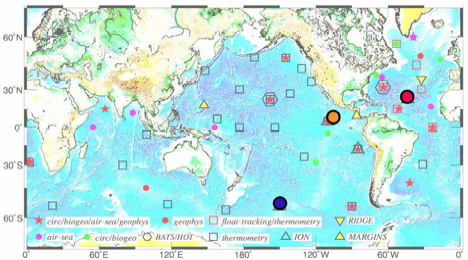
Figure 2. Recommended seismic, borehole, or
multidisciplinary seafloor observatory sites. [ORION Program Office, 2006]
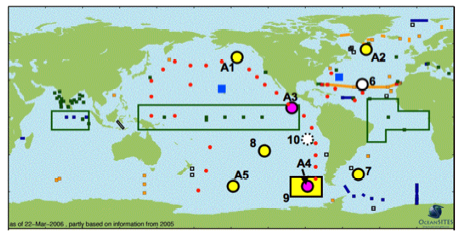
Figure 3. Distribution of Global OOI Sites (large
labeled filled circles and rectangle) relative to the OceanSITES near-term
network and future DART buoy locations (red dots). The Global sites labeled
“A”n have the highest but equal priority; the priorities of the remaining
Global sites increase with label number. Mooring types are indicated by color:
yellow disks for acoustically-linked discus buoy, purple disks for SPAR buoy;
and white disks for discus buoys with electrical-optical-mechanical (EOM)
cables. The yellow square shows
one possible location for the relocatable Global Pioneer Array, which will
consist of a backbone of four sub-surface moorings and four gliders. The existing
long-term oceanographic time series sites at Hawaii and Bermuda are shown by
the blue rectangles. [ORION Program Office, 2006]
Appendix
3: "MOBB" (Monterey bay
Ocean Bottom Broad Band project).
A
continuously recording autonomous broadband seismic station was installed in
April 2002 in Monterey Bay (California), 40 km off-shore at a water depth of
1000m, and has been operating ever since. MOBB (Monterey bay Ocean floor Broad
Band project) is a collaborative project between the Monterey Bay Aquarium
Research Institute (MBARI) and the Berkeley Seismological Laboratory (BSL). This is a pilot project
towards extending the on-shore broadband seismic network in northern
California, to the seaside of the North-America/Pacific plate boundary,
providing better azimuthal coverage for regional earthquake and structure
studies.
The
system comprises a three component Guralp CMG-1 seismometer with a 360 s corner
period, buried below the ocean floor, as well as a current meter and DPG
(differential pressure gauge) installed in the vicinity of the seismometer. The
recording and battery package, which is installed nearby in an anti-tralling
device, is exchanged every 3-4 months with the help of the MBARI ROV Ventana.
The data are archived at the Northern California Earthquake Data Center (NCEDC:
http: //www.ncedc.org).
The
data accumulated over the past 5 years has enabled studies of long period
seismic noise in shallow buried near-coast ocean floor environments. We discuss
the sources of this noise, which are either signal-generated (due to
reverberation of seismic waves in the shallow seafloor sediments), or due to
ocean processes such as infragravity waves. We have developed procedures to
reduce the level of this noise by post-processing and illustrate this with some
examples.
During
the next year, we will develop an interface to connect the MOBB system to the
MARS cable (Monterey Accelerated Research System; \url
{http://www.mbari.org/mars/) whose termination is less than 4 km from our site.
Connection to the cable will provide real-time, continuous seismic data which
will be merged with the rest of the northern California real-time seismic
system, as part of the Berkeley Digital Seismic Network (BDSN). This will serve as protoype for other
real-time multi-parameter cabled systems which comprise both analog and digital
devices with a variety of sampling and timing requirements, such as those
planned in the context of the Ocean Observatory Initiative (OOI) program in the
US.